Our Editorial Philosophy
Retain All That Is Good
In our revision of the 1928 Book of Common Prayer, we took to heart the words of the Holy Synod’s Observations:
[The Book of Common Prayer] present[s] very little comparatively that clearly contradicts Orthodox teaching, and therefore would not be admissible in Orthodox worship.
The goodness and truth replete in the Prayer Book Tradition ought to be retained. No changes should be made unless really and truly necessary or expedient.
Change Only When Expedient
We reflected upon every word of the 1928 BCP, and we were very careful when we discerned that some element in it needed to be changed. These changes were either necessary (such as when an element contradicted or did not sufficiently express the Catholic Faith) or expedient (such as when the organic development of the liturgy has moved in a certain direction).
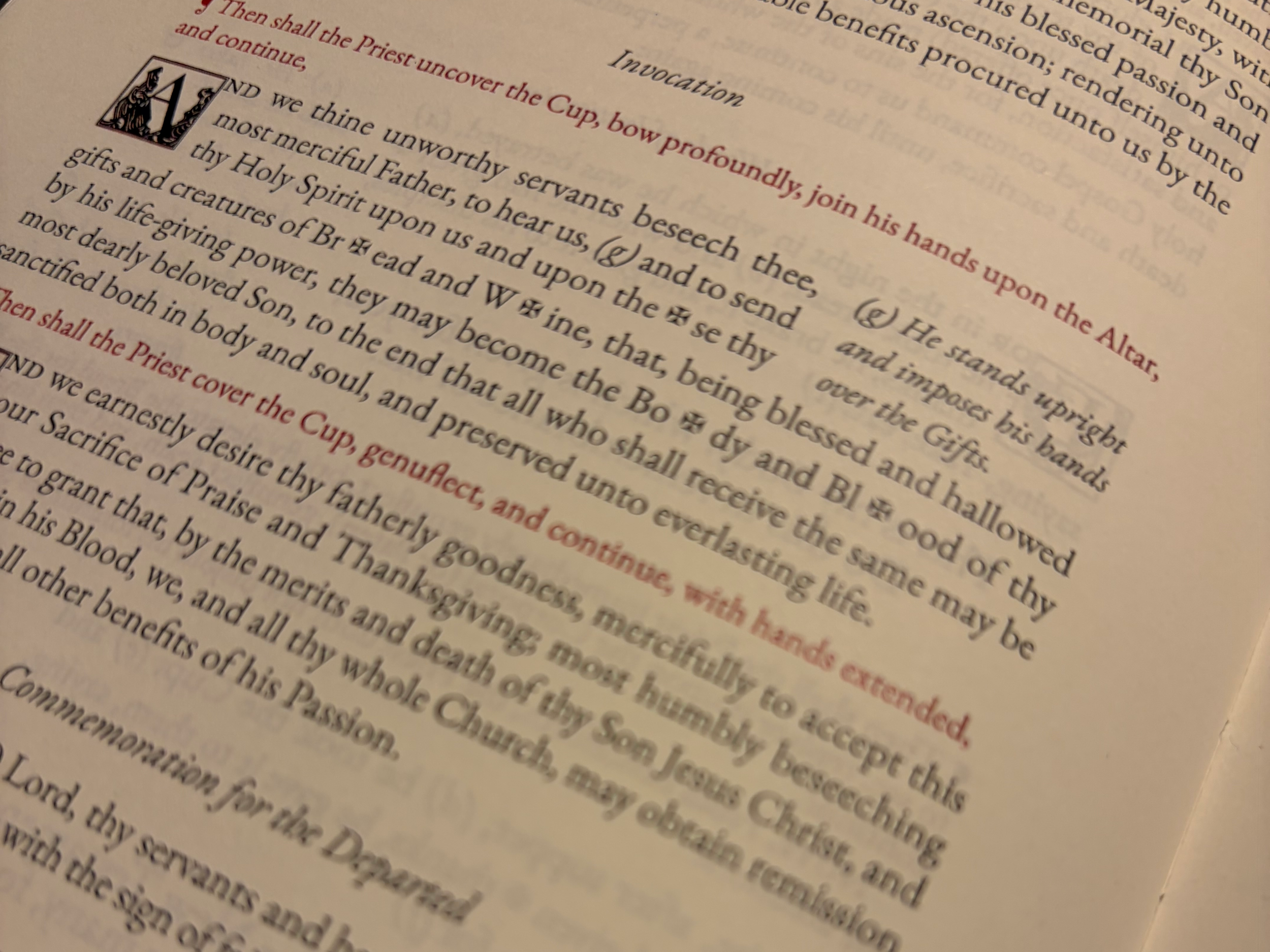
Of the essential changes were: the removal of the Filioque from the Nicene Creed, the provision of intercession of the saints in the Daily Office and the Litany, restoration of prayers for the dead in requiem services, and the clarification of the Invocation in the Holy Communion.
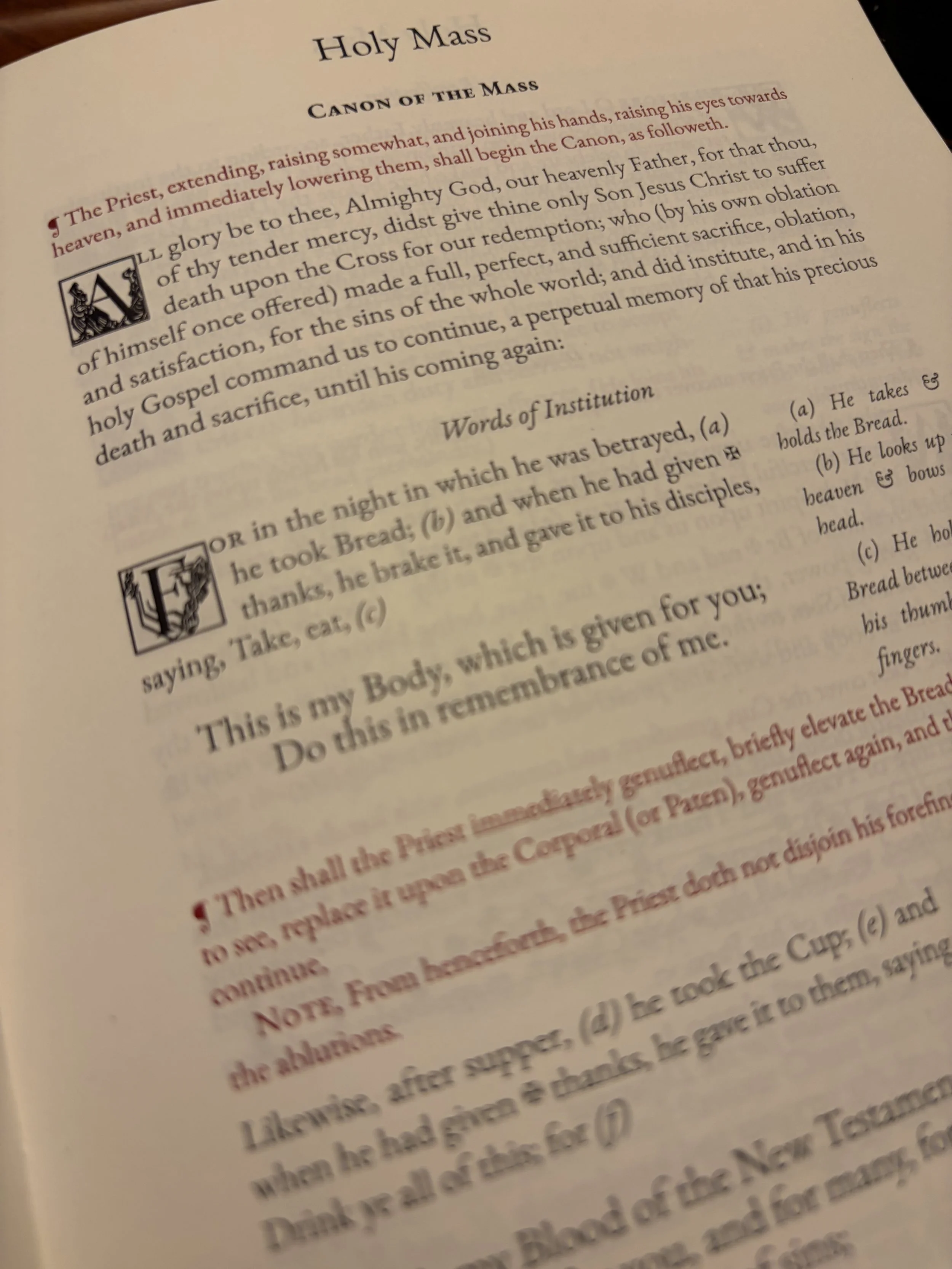
Of the expedient changes were: the reorganisation of the Daily Office Lectionary (to accommodate additional Feasts in the Temporale and to better the flow of the lections), the transfer of the Gloria in excelsis in the Mass from the end to the beginning (this is not only its historic place, but has now become the common practice in both Anglican and Orthodox churches), the slight language change in the Canon (Orthodox priests have been saying ‘by his own oblation of himself…’ for so long, an influence from the 1929 Scottish Book of Common Prayer, it seemed inconvenient to deviate from this).
Closest Liturgical Relative
We did not use the ‘opportunity’ of a change to import a favourite prayer of an editor or some relic of an ancient manuscript. Rather, we made sure to stay within the Prayer Book Tradition, so that any change or addition was of the same linguistic spirit as the original. The chief principle for this is that of the Closest Liturgical Relative.
When something needed to be changed or added, we declined from composing a new prayer or liturgical element. We are editors, not authors. Rather, starting with the 1928 BCP, we looked for the closest Book which had an adequate replacement.
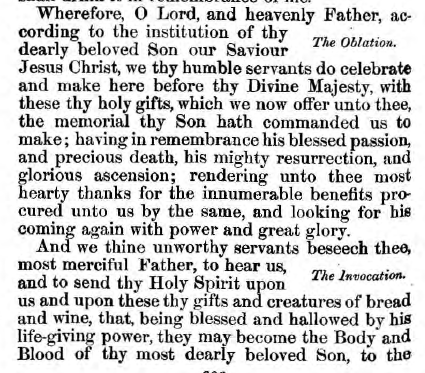
For example, the Invocation needed to be changed, so the earlier American Prayer Books were consulted. However, those did not contain a sufficient replacement. So, the Scottish Eucharistic tradition was consulted, which did have a sufficient (and ancient) Invocation, and the closest book to the 1928 American BCP was the 1929 Scottish BCP, whence the Invocation was sourced.